
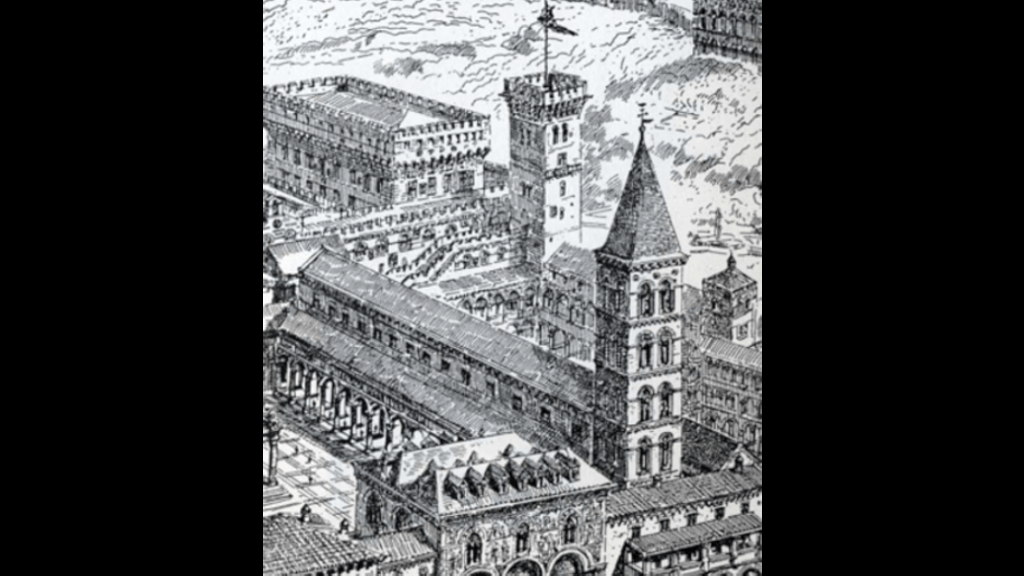
Basilica di S.Pietro – 1489 – (sopra)
Si parla ciclicamente, spesso banalmente, delle figure nascoste che molti pittori avrebbero più o meno velatamente dissimulato
nelle loro rappresentazioni, generalmente con curiosità, creano interesse poichè aggiungono un elemento di mistero all’opera, la avvolgono di un alone di segretezza che induce l’osservatore a proiettarsi in un mondo di significati occulti, riportandoci
involontariamente a emozioni originate da ricordi infantili. L’immagine fiabesca rimanda la mente al fascino inconscio di castelli, belve o mostri che si materializzano dalle tenebre, in realtà di solito sono dettagli poco significativi opportunamente modificati, anche difficilmente riscontrabili poiché celati in particolari come rocce o macchie che generano l’incertezza se siano immagini volute, oppure come accade per certe forme casuali in natura, appositamente dotate di significato per l’ancestrale innata tendenza dell’uomo a dare ordine dove ordine non c’è. Di solito è vera la seconda ipotesi, ma non sempre.
A volte sussiste il dubbio se l’intenzionalità dell’artista sia solo di svago o possa avere un preciso significato iconografico ed è qui che la cosa si fa interessante, è qui che Leonardo mostra l’abisso che lo divide dal resto del mondo […]


St. Peter’s Basilica – 1489 – (above)
“Cyclically, often banally, there is talk of hidden figures that many painters would have more or less veiledly concealed in their representations, generally with curiosity, they create interest because they add an element of mystery to the work, enveloping it in an aura of secrecy that induces the observer to project themselves into a world of occult meanings, involuntarily bringing us back to emotions originating from childhood memories. The fairy-tale image refers the mind to the unconscious charm of castles, beasts, or monsters materializing from the darkness, which in reality are usually insignificant details suitably modified, also hardly detectable because they are concealed in particulars like rocks or stains that generate uncertainty as to whether they are intentional images, or as happens with certain random shapes in nature, specially endowed with meaning for mankind’s ancestral innate tendency to impose order where there is none. Usually, the second hypothesis is true, but not always. Sometimes, there is doubt as to whether the artist’s intentionality is merely for amusement or may have a precise iconographic significance, and it is here that things become interesting, it is here that Leonardo shows the abyss that separates him from the rest of the world […]”
——————————————————————————————————————–
的中文翻译是 “圣彼得大教堂 – 1489年 – (上方)
周期性地,通常平淡无奇地,人们谈论许多画家在他们的作品中更多或更少地隐匿的隐藏形象,一般都是出于好奇,它们增添了作品的神秘元素,将其笼罩在一种神秘的氛围中,促使观察者将自己投射到一个充满神秘意义的世界中,不自觉地将我们带回到源自童年记忆的情感中。童话般的形象将思维引向来自黑暗中物质化的城堡、野兽或怪物的无意识魅力,实际上,这些通常是适度修改的无关紧要的细节,也很难检测出来,因为它们隐藏在像岩石或污点这样的细节中,使人产生不确定性,不知道它们是有意的形象,还是像某些自然中的随机形状一样,专门赋予了意义,以满足人类先祖的天生倾向,在无序中赋予秩序。通常情况下,第二种假设是正确的,但并非总是如此。有时,人们怀疑艺术家的意图是否仅仅是为了消遣,或者是否可能具有明确的图像意义,这就是事情变得有趣的地方,这就是列奥纳多展示他与世界其余部分之间的深渊的地方[…]
 Art&Vision